Showing posts with label 3 stars. Show all posts

Friday, September 2, 2011

State of Wonder and Before I Go To Sleep


The best thrillers sometimes turn out to be the ones that aren't even billed as such. To be able, at the end of a book, gasp with surprise, is a rare pleasure. That gasp was the difference between Ann Patchett's State of Wonder and Before I Go To Sleep by SJ Watson.
The blurbs on Watson's book referred to it as "Memento on meth" and it was reminiscent of Memento. Christine wakes up every morning with no memory and has to quickly learn who to trust. A daily phone call from her doctor tells her where to find her journal, where she writes down what she pieces together (and what she also has to read every day) about her life. It is a fast paced if generally unbelievable book. It didn't take me long to figure out the real story, although in the end there were a lot of unanswered questions. Still, it was entertaining!
State of Wonder reminded me of Bel Canto-- many unrelated characters thrown together, forced to interact and with the outcome a surprise. Marina Singh is sent to the Amazon by the pharmaceutical company she works for to get an update from her med school mentor, Dr. Swenson, on the latter's research and to find out more about the mysterious death of her colleague. Marina becomes enthralled with the Amazon tribe she lives with, Dr. Swenson's research, and Dr. Swenson's "adopted" son Easter. The final Amazon scene is exciting as any Indiana Jones movie and my jaw dropped.
3 stars for the Watson book and 5 stars for the Patchett.

Tuesday, June 28, 2011

Enough About Love


Enough About Love by Herve le Tellier is just longer than a novella; a few character sketches. Set in contemporay France, it tells the story of two couples, upper middle class, doctors, writers, a lawyer, with children. The women each meet someone else and either leave, or contemplate leaving their families. Le Tellier composes the chapters from individual and couple standpoints and is non-judgemental, in the way only the French can be when it comes to affairs. A book like this can easily been read as a film and I kept imagining Juliette Binoche as the lawyer.
This was a subtle, yet easy read, but for me, ultimately, unremarkable. I'd be suprised if I remember it in a year. 3/5 netflix stars.

Monday, June 6, 2011

The Song of the Lark


I continued my revisit of Willa Cather with The Song of the Lark, a book I hadn't read previously in high school, but which kind of reminded me of me in high school. Thea is talented adolescent musician living in small town Moonstone, CO. Many of the adults in her life realize her talent could take her beyond the small town and Thea ultimately realizes this too. Like Thea, I knew college would be an opportunity for me to leave Kansas and experience life in a bigger city than Wichita.
Thea and her family all make sacrifices so she can study piano and voice in Chicago. Cather uses her descriptive writing style to highlight Thea's training. Whereas I love her descriptions of life in the west and midwest, her accounts of lessons and operas were less interesting to me. Thea had "an attitude" that in a woman today would be considered bitchy-- I had to catch and remind myself that her journey was unusual for a woman of her day and her obstacles numerous.
This was just not my favorite Cather book, although she still tackles contemporary themes of racism against immigrants and women working and taking non-traditional life routes (Thea rejects marriage in favor of career). 3 out of 5 stars.

Monday, May 3, 2010

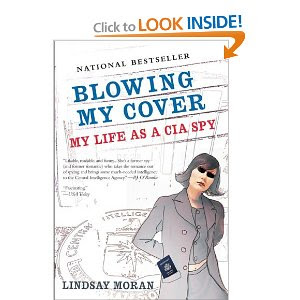
The Guinea Pig Diaries: My Life as an Experiment and Blowing My Cover: My Life as a CIA Spy


The past month has been harried and hectic for me-- two trips, a ballet and bookbinding class, friends in from out of town, work events.  Suddenly reading was not only not a priority, but was hardly even an option for relaxation.  After hosting book club yesterday, I settled on the couch to finish Blowing My Cover: My Life as a CIA Spy by Lindsay Moran and thought about some of the techniques presented in that book as well as The Guinea Pig Diaries by AJ Jacobs that could help get my life under control.
The premise of Jacobs' book is to live his life according to such varied rules as George Washington's "Rules of Civility and Decent Behaviour" and cutting out multitasking.  For a series of months, he even outsources his life to India.  Moran, meanwhile acts on a dream and applies to the CIA, where she is trained as a case manager to serve overseas.  She learns how to use an alias, how to avoid being trailed and how to manipulate agents into committing treason and giving her info about their countries.
Was I able to outsource my life, for example, I could have forgone nights at home doing laundry and packing and instead gone to the gym or to the symphony with friends, while someone else prepared for my trips.  Were I a master of disguise, I could have traveled the Baltimore light rail without feeling completely out of place.  If I were a master of foreign language, I could have understood Turkish and better bargained at the Grand Bazaar.  Had I decided to abide by "decent behaviour" I might not have had too much to drink with my co-workers.
Both books were light and easy reads. 3/5 stars each.

Thursday, January 28, 2010

Olive Kitteridge


Most people know I grew up in Kansas, and although Wichita is not a particularly small town, it sometimes felt that way. Family trips up to Ipswich, MA to see my cousins, or summer vacations to Santa Fe, Colorado or Italy confirmed to me that the world was bigger and I needed to see it.  I couldn't imagine why everyone didn't want to leave.  I moved to Boston after graduation and hardly looked back.   I thought reading Olive Kitteridge by Elizabeth Strout reminded me of the insularity I sometimes felt growing up.
Olive is the main character connecting a dozen or so stories set in small town Maine.  She's a curmudgeon, large and unattractive, overbearing and overall mean.  In short, not a sympathetic character.  The people in her town are gossips and un-motivated.  Her son manages to escape first to California, and then to New York.  The other men in the book seem broken and the women seem to get by mostly by being crazy and/or drunk.
It's been more (ahem) than 10 years I've lived in Boston and I can recall Wichita fondly.  I'm happy to still have close friends I grew up with; some moved away, and some stayed there.  But they're happy and successful.  I'm better able to connect with fellow midwestern ex-pats and appreciate that friendliness.  And I've come to realize that New Englanders are just as insular, if not more, than midwesterners.  The discomfort I felt reading Olive Kitteridge came from my own feeling of being sucked in to Boston.
Ms. Strout is a wonderful writer. Her scenes and characters are evocative to a fault.  So it's not the writing, but the subject matter.  Last spring I met a woman in my neighborhood and upon telling her that we like to recruit a geographically diverse housestaff to my hospital, her response, "But why would that matter?" seemed to summarize my overall frustration with Olive Kitteridge.
Netflix stars: 3/5.

Tuesday, August 11, 2009

Twilight And Harry Potter and the Half Blood Prince


I'd bet that, over the past 10 years, 33% of all passengers on commercial flights read a Harry Potter book on the plane. Even with increased fees to check luggage and decreased space to bring luggage on board, at least half a dozen people are carrying a 600+ page hardback book authored by J.K. Rowling. In the past five years, I bet that 89% of all 11-19 year female passengers on planes read the Twilight series by Stephenie Meyer and 47% of 19+ women read the series. My calculations are based on personal, if not scientific, experience. Two weeks ago, on my way to my summer vacation, I was a statistic.
Twilight had been making the rounds at the office and in order to participate in water cooler talk, I needed to read it. Also my director brought it in to me and told me to report back the next day on what page I was on. I saved it for my cross country flight and nearly finished it. I assume most people know the basic plot of Twilight: handsome vampire meets average 17 year old girl in a sleepy Pacific Northwest town and dangerous hijinks ensue when they aren't gazing adoringly into each other's eyes. It was a quick read, full of magic, but for all of Edward's perfection, a lingering, nagging thought...why do men need more excuses to not fully commit? Okay, he's a vampire, but really, get it together.
Meanwhile, I'd saved my copy of Harry Potter and the Half Blood Prince to read right before the movie opened. Somehow the opening came as a surprise and I wasn't prepared. This weekend, having few firm plans, I dusted off my copy and delved in, pausing only to go to the farmer's market and feed the cats. I'll give away no plots here, but will say that Rowling's writing seems to mature right along with Harry, Ron, Hermione and the other Hogwarts students. I feel like I've really come to know these characters and, ironically, although they are witches and wizards, Rowling seems to represent actual teenagers better than Meyer does.
I have one more weekend trip this summer and am debating whether to finish up the Potter series or move on to Book 2 of the Twilight series. Either way, I'll be in good company on the plane.
Netflix stars: 3/5 for Twilight, 5/5 for Harry Potter

Tuesday, June 30, 2009

Gilead


I grew up attending church. We went to a Presbyterian Church in Wichita, or, when in Oklahoma City, went to the church my grandparents and parents went to. As a kid, I almost always went to Sunday School-- an hour of songs, crafts, snacks and a Bible story. On occassions I'd have to go to the "adult" service and it would seriously try my patience. In my mind, the sermon was always 45 minutes, with the remaining 15 minutes song singing, prayer and offering collection. This was all followed by donuts in the fellowship hall. It was a time to try to avoid fidgeting and maybe a time to try to understand the sermon, which didn't seem to have anything to do the Bible stories and miracles we learned about in Sunday School. By the time I got to high school, I didn't really have to go to church any longer, so I didn't.

Twenty some odd years later I've decided to give church another try. I wanted a spirit of community, a calmness and a reason to wake up on Sunday mornings. Most suprising is that the sermons are maybe just 15 minutes and are also totally understandable now!

This is all a long way of saying that reading Gilead by Marilynne Robinson was a little like attending a church service as a kid-- kind of tedious and sleep inducing, but poetic-- and a little like attending a church service as an adult-- thought provoking, relaxing and at times even entertaining.

Robinson composes the novel as a letter from Pastor Ames, a man in his 70s, to his young son. It's a loving and detailed journal and at times, it was all I could do to remember that Robinson is in fact a novelist and Ames is a fictional character. The letter/journal is part observation-- detailing what his son is wearing (a favorite red shirt), part philosophical and religious musing and part family history-- from finding and visiting a grandfather's grave in Kansas, to admitting his jealousy and confusion over his best friend's family, with special focus on young Boughton.

I started this book months ago and had a lot of trouble getting into it. I'd read some, then start another book...so I was continually reading it but while I had other books going. It wasn't until about half way through the book that a plot/storyline took hold. There's no doubt that Robinson is an amazing writer. Housekeeping remains one of my all time favorite books. But I can't in good faith recommend this book fully. It was worth the effort in the end, and I'm glad I read it, but it was a tough journey. Thus I'm giving it 3/5 netflix stars.

Tuesday, June 23, 2009

Flower Children


A few weeks ago, in a post dentist high, I bought a bagfull of books at the Booksmith. It's been a dreary spring and early summer and I was craving some beach reading, even if it's too rainy to go to the beach. The cover of Flower Children, by Maxine Swann, showed a 70s era photo of kids romping in a field of flowers. A small volume, it looked promising, and in fact, it was light and if not completely engaging, at least harmless.

The "children" in questions are the offspring of a pair of hippies, living in a ramshackle old country home. The book is comprised of related short stories taking place over the children's lives. The children go on ski and road trips with their father, divorced from their mother, and generally make life difficult for his girlfriends. They go to their grandma's and swim in the pool while the adults have cocktails. They ride ponies with the neighborhood boys and have their first kisses.

But this book lacked the magic the glowing cover seemed to offer. There was no hook and the characters lacked depth. In all, though, it wasn't terrible. If you were to find it on the bookshelf of your beach house on a rainy afternoon, it would suffice.

3/5 netflix stars.

Thursday, May 14, 2009

Crazy Love


While reading Crazy Love by Leslie Morgan Steiner, I wanted more than anything for the book to be fiction. I wanted this in part because Leslie's story was sad and difficult and I wouldn't want anyone to suffer the injustices she described. But I also wanted it because the memoir was just so sloppily written that I wanted to just read it as a throwaway book.

Leslie writes about her first marriage in her early 20s to a man who first hit her five days before their wedding. She describes the violence inflicted on her during their honeymoon and also her isolation when they moved away from her friends and family to Vermont. Conor meets many hallmarks of an abuser-- he came from a family where he was abused and slowly controls Leslie, even though she doesn't think of herself as a "typical" battered wife. And in many ways, she's not what we think. She comes from an old, rich family, went to a prestigious college, interned at Seventeen magazine, went to business school. Not to be picky, but these are the exact reasons I wanted the book to be better written! The chronology was confusing, her's and Conor's characters were not multi-dimensional and there were some many inaccuracies (ie, Bostonians do not say "pop" for a Coke-- a detail, but if you're going to throw it in, it better be correct!).

I've read a couple memoirs in the past year or so. The best was An Exact Replica of a Figment of My Imagination and the so-so was Trail of Crumbs. This leans more to the latter-- a need to get the story out.

I admire Leslie for telling her story and for the ultimate "happy ending" even though it wasn't as sophisticated as I would have liked. I'm giving it 3/5 netflix stars.

Thursday, January 15, 2009

Jamaica Inn


Say you're a single woman whose closest family member has died, or perhaps you have lost the little fortune you might have had and somehow have to fend for yourself. What is your best option? Calling on your friends for help? Finding employment or try internet dating? Nope. Your best option is to time travel back to Victorian English countryside, where even though there might be no neighbors for miles and miles, there will be one single, dashing bachelor. He may be a bit rougue, but no doubt you will find yourself living happily ever after.

Jamaica Inn by Daphne du Maurier is such a novel, but it is darker than a Jane Austen and more along the lines of a Bronte. Our heroine, Mary, has made a deathbed promise to her mother to sell the farm and go live with her aunt and uncle at Jamaica Inn. She soon learns that many strange things happen at the Inn, and her cowered aunt is not the first to tell her that her uncle is up to no good. Mary is curious, however, and soon gets embroiled in a great smuggling plot.

Jamaica Inn is a great gothic thriller and therefore a fast read. I don't read a lot of thrillers/mysteries and don't want to give away key details, but I was surprised by the twist at the end...and it's no surprise that Mary gets the guy.

Next on my list of things to do? Figure out time travel.

Netflix rating: 3/5 stars

Tuesday, December 2, 2008

An Exact Replica of a Figment of My Imagination and Observatory Mansions


Warning! The following is written during the holiday season; it's so sickly sweet you should probably make a dentist appointment first.

Nearly seven years ago a small group of us started a book club. We realized that now out of school, we might like to read for fun, but we also realized that just because we all lived near each other didn't mean we'd still see each other all the time, so book club became a once a month way to make sure we caught up. Over the years some friends have joined us and some friends have left us, but there's still a few from that first year. We take turns picking books and I think we each have a certain style.
Mihee tends to pick books that cause us all grief-- they're usually obscure classics or biographies of scientists, while Steph waits to pick a book by a certain author she's been excited about for a long time.
An Exact Replica of a Figment of My Imagination by Elizabeth McCracken was Dali's pick last month. It wasn't a happy book: it's a memoir about the loss of a child. But it was the most honest book I've read in a long time. Elizabeth is an author married to another author: Edward Carey. While reading An Exact Replica, I kept meaning to look up Edward Carey, but it wasn't until Tishka visited a few weekends ago and we were talking about a book we often joke about, Observatory Mansions. And that's when we realized it was Edward Carey's first novel. We were ecstatic! Years ago, Observatory Mansions was one of Steph's picks for book club. It's about an oddball cast of characters who live in a rundown apartment building called Observatory Mansions. I don't remember a lot of details about the book, but the protaganist, Francis Orme, wears white gloves every day and impersonates statues in public. Anna Tap is the (anti)heroine. While I was reading Observatory Mansions, I thought it was one of the worst books I'd ever read. But I think back to it quite often (as I do another hated book, American Pastoral by Phillip Roth).
When I realized both authors were married and had the shared experience Ms. McCracken writes about, I could see how their mutual creativity and quirkiness attracted and protected the other. I could mostly tell they were lucky to have found each other.
Neither of these books is for everyone, but they both told a story that will stay with me for a long time...kind of like my book club friends.
Netflix stars-- 5 for An Exact Replica and 3 for Observatory Mansions.

Tuesday, August 26, 2008

Izzy, Willy-Nilly


Reading adolescent books with adult eyes is more enlightening than I'd ever imagine. I know many books I read as a child my mom did not necessarily approve of (like the Sweet Pickles series...I think because of gender inequality?) and many I read I would not now approve of (although I would never discourage the reading of any book, even if it is crap). So I read the "classic" Izzy, Willy-Nilly by Cynthia Voigt in part to see how my adult self would react to it.

Voigt was the Jodi Picoult of the 1980s. She wrote books that dealt with sensitives subjects for young adults; Izzy, Willy-Nilly has the tagline, "One drunk driver changed her life forever." I don't remember reading this book as an adolescent, but if I did, I would probably be in awe of Izzy and her friends dating, being cheerleaders and popular and going to parties. The lives of literary teens never seemed to quite mimic mine at the time. But as an adult, I really identified with the friendship that Izzy and Rosamunde formed. It seemed entirely plausible that many of Izzy's friends would lack the maturity and introspection to know how to transcend from a friendship with a perfectly mobile Izzy to a friendship with Izzy with a "leg and a half".

A lot of the book was very 1980s-- the big hair, the references to Stevie Wonder's "I Just Called To Say I Love You" and most notably, for me, the lack of independence and career motivation for Izzy and her friends. There was definitely a lot of talk about "having a good figure" and not so much talk about extracurricular activities and volunteering, which are a way of life for all teens now. Most noticebly absent from this book was the lack of repurcussion for the drunk driver.

Izzy frequently imagined a tiny, imaginary, replica of herself who perfectly reflected her feelings at given moments, even if she didn't publicly display those emotions. And Izzy was proud, scared, nervous and catty. All realistic for a 15 year old girl.

Despite it shortfalls (seriously-- address the drunk driving if you're going to bring it up!), I would be happy to recommend this book to a teen girl.

Netflix stars: 3/5

Monday, July 21, 2008

A Million Little Pieces


I'll be the first to admit those Oprah's Book Club stickers bug me. For awhile it was because I knew it meant the book was going to tell the story of incest or abuse with an amazing protaganist turn around by book's end (think The Lovely Bones). She started expanding her choices, including Faulkner and McCarthy, but still...her pushiness and cult following (ladies, really, does a multi-millionaire woman have so much in common with you, trying to pay off student loans while raising two kids and facing a home foreclosure?) irked me. I cheered when Jonathan Franzen rejected her and refused to be a guest on her show, and I cringed and rooted for James Frey when she publicly derided him.

Having not actually read A Million Little Pieces, I thought: now's the time, and why not compare it to Jonathan Franzen's book of essays, How To Be Alone (I'd read The Corrections years ago and loved it).

First up, A Million Little Pieces. Steph gives a nice synopsis here, so I won't go through all that. But honestly, I was disappointed. Maybe it was because it was hyped in so many ways-- before he was exposed, and after. I just didn't think the writing was that great. He capitalizes a lot of Things and is very repetative. I'm not sure if I was influenced by the fact I knew he had exxagerated and made up parts of his story, but I found a lot of it completely unbelievable, and was surprised so many people bought it, hook, line and sinker. It was all tied up very neatly and in fact read pretty well as a novel, save for the bad writing. I was captivated for sure, and won't become a drug addict anytime soon, so I guess in that regards it's successful. I give this book 3 netflix stars. And I recommend drinking gin and tonics while reading it, because it's kind of more kick ass that way.

Friday, May 30, 2008

THE HORSE AND HIS BOY- by c.s. lewis

Shasta is a young boy who was found on the beach by a Calormene fisherman named Arsheesh. Arsheesh treats Shasta as a slave, and when Shasta overhears him agreeing to sell the boy to another high ranking Calormene, he decides to run away with the noble man's horse. He learns that the horse can talk, and that he's really a Narnian horse named Bree, so they set off on their adventure to return to Narnia. Along the way they meet another Narnian horse named Hwin and her rider Aravis who are fleeing an arranged marriage for Aravis. The four band together, and learn of evil plans to take over Narnia and neighboring lands. They ride quickly, crossing a lengthy dessert in order to warn Narnia and give them time to prepare for battle.
This felt too far removed from the Narnia series due to the fact that the main characters are not Pevensie children, but new characters. They also don't return in future books, making it seem a little removed.
Netflix rating? 3/5 stars.

Friday, April 25, 2008

What is the What


11:04 AM matt: did you make it through what is the what?
me: almost! I have about30 pages left!
what were your thoughts?
matt: well
it's too long by about half
11:05 AM and maybe it was very true to the guy's voice, but it seemed pretty flat.
i wasn't a huge fan
me: yeah, that's what I thought too!
11:06 AM matt: but i did like seeing how his refuge community sort of knit itself together
me: I actually thought the "voice" changed a lot-- it wasn't consistent
and I didn't like the narrating to the present day characters-- like the nurse in the ER or the attackers' son
I feel guilty for not liking it more
11:07 AM matt: yeah i didn't like that either - really really pedantic.
11:08 AM i started to feel guilty and then realized that a david eggars book is not to be confused with the actual plight of these people, you know
me: I think he would have done better to have a different ghost writer
Eggers I think was too focussed on his own story
(heartbreaking work of staggering genius)
11:09 AM matt: i also wonder if this type of book is just the P.C. modern version of travel narratives like the heart of darkness and robinson crusoe
me: it did seem politically motivated
matt: which would sort of cast in a light of appropriation of these peoples' story
me: I did like that the story became more real
11:10 AM It made it make more sense to me
I felt sad about William K, and Tabitha...
which isn't something you get from the news necessarily
11:11 AM matt: well true. the book definitely wasn't terrible, and is effective as a educational or political tool, which is probably what it was meant as
but if i'd realized that beforehand i probably wouldn't have started it
when is your book club?
11:14 AM me: book club is Saturday!
I might be the only one who read it

Sunday, March 16, 2008

The Pickup


Besides being a book on my shelf, The Pickup was authored by Nadine Gordimer, a friend of Paul Theroux, so after reading his his novellas, I thought I'd give this a shot. I read July's People a few years ago and found it both uncomfortable and probably accurate. Ms. Gordimer is a white African, and, like Doris Lessing or other female, white, African writers, carries a heavy mantle. She writes about race conflict, but in an intimate, yet removed, manner.
The Pickup details a relationship between Julie, a privelaged white South African woman, and her "pick-up" lover, Adbu, someone from a more 3rd world African country. At first I thought The Pickup was a comment on the current U.S. policy on "illegals" but came to realize that many countries have this conflict and that while I could see current U.S. debate in the characters, it was also very space specific. To mention that Julie is privelaged is like saying the earth is round; she chooses to live a bohemian lifestyle, maybe working, maybe not, in a small cottage in the city, away from her suburban upbringing and well-to-do father. She regularly meets a group of friends at the L.A. Cafe and these friends serve as her surrogate family. They all come and go, not answering to anyone. She meets Abdu when she gets in an accident and needs her car repaired. On impulse she invites him to coffee at her cafe and from there it goes. She seems sincere, but it's unclear what she sees in him-- is he a further act of revolt from her father? And what does he see in her besides a possible entree into "legal" society? They take their relationship farther than anyone imagines, and Julie can ask for general favors from her family: money to provide a needed well for his family (a liberal ideal of service) but cannot ask her father for specific help obtaining visas. Abdu can provide for her adventure and something different (she does not shy away from, nor complain about rustic conditions) but cannot provide the ultimate security for her: an accepting family.
Ms. Gordimer writes this book in the 3rd person passive voice, making it difficult to get to fully know or identify with the characters, which is maybe the point. She interjects editorial, pointing out that Julie's, and that of her friends and family, status would give allow her to emigrate country to country, never really being "illegal" but Abdu, by virtue of his race, religion and country of birth, can never be welcomed anywhere but there.
I liked this book but didn't love it. I had a hard time identifying with any of the characters although by the end I was able to sympathize with the decisions each made. I give this book 3/5 netflix stars.

Sunday, December 30, 2007

Half Moon Street


Sometimes I think I've traveled to more places than I actually have. I watch a lot of foreign films; French New Wave is among my favorite genres. I read books set in European, Asian and South American countries. Fortunately, Paul Theroux travels to all the places I haven't and is a prolific writer to boot. Last summer I read Dark Star Safari, his narrative about traveling in a mostly traditional manner from Alexandria to Cape Town. His Africa isn't glamorous-- it's more Peace Corps than Safari and he purposely takes the trail less taken (at least by the white man). Theroux is one of my favorite writers; he has a caustic wit and isn't afraid to express an unpopular opinion. He writes mostly non-fiction, but I find his fiction equally captivating. He sets his stories in foreign locales but mixes the ordinary with irony and sarcasm.
Half Moon Street is an older volume of two novellas. I picked it up hoping to escape from wintry Boston. I got as far as London. The first of the two stories is set in London in the 1980s. Dr. Slaughter is a young woman with a fellowship in international relations. She's headstrong and gutsy, but calculating. She doesn't have the financial means to live the life she wants, but lives frugally, eating vegetarian, turning down alcohol and exercising religiously. When presented with an opportunity to become an "escort" she sees it as a means to meet people who can further her career while also making money and providing a social life on the side. This story is one that makes you cringe, but also one that has you keep reading, like watching a wreck. Ms. Slaughter's name alone suggests a terrible end, but it isn't until the novella's final paragraph that even the reader realizes how close she's come.
The second novella takes place in Boston and it's suburbs and the Cape. We learn of two brothers, twins, who, far from being close, are nothing but. As children they would trick parents. teachers and friends, one playing the other. The impersonations were mostly self preservation for each-- passing history, passing a driver's test. After the Vietnam War one brother goes missing, and the remaining brother is mostly satisfied by his disappearance as he can live his own life. One day the missing brother shows up, sick, at his brother's door. After being told he can stay a week, no more, his twin goes to the family vacation home on the Cape. Upon his return, the "missing" brother is dead. The surviving brother disposes of the body (after all, it wasn't his fault) and then goes on an unintended mission to find out who his brother was. It turns out he was a doctor in Kenmore Square and the brother turns to his old ruse of impersonation to find out why his brother was killed. The end is as chilling an end as the first novella. Both stories are unrelated save the theme of impersonation and its unintended consequences. Netflix rating of 3/5 stars.

Sunday, December 16, 2007

Snow Flower and the Secret Fan


Several months back our book club read The Good Earth, which told of the hard life of peasants in China in the early 20th century. Snow Flower and the Secret Fan by Lisa See takes place about a century earlier, but despite the better standing of Lily and Snow Flower, their hardships were much the same as the family in The Good Earth.
Lily and Snow Flower are sworn as laotong, an eternal BFF, early in their lives. They understand their roles as women-- from early footbinding, to learning domestic arts, to marriage and serving their husbands and husband's families. While they never question those roles, they find ways to communicate true feelings, happiness, and especially unhappiness through the secret writing nu shu. Just like the peasants in The Good Earth, these girls experience drought, famine, untimely death and illness as well as success through hard work and tradition keeping.
The friendship Lily and Snow Flower shared was poignant, but the descriptions of the accepted footbindings were what really amazed me. Although impossible to change a tradition in one generation or by one woman, I was surprised that the two "sisters" so easily and readily accepted the practice for their own daughters after experiencing such pain and personal loss.
I enjoyed Snow Flower and the Secret Fan-- the story moved swiftly and the characters came to life with plausible jealousies, loves, desires and pain. Netflix rating 3/5.

Wednesday, November 28, 2007

JOY SCHOOL- by elizabeth berg

I think I've read at least one other book by this author, but I don't remember enough about it to compare. I also realized (more than halfway through) that this was a continuation of sorts from "Durable Goods," a fact which, had I known earlier, would have caused me to put this off until I'd read the first one. Regardless, it stood on its own pretty well, with only hints at previous incidents.
The book's told in almost 13yr old Katie's voice, and is therefore simpler than what I'm used to reading. This made it a super quick read, and while fairly easy, still held my interest. Katie has just moved to a small town in Missouri from Texas. An older sister makes an appearance or two, but has moved to Mexico and married her boyfriend. Their mother died (one of the pieces from the first book, I gather) and Katie's left with their emotionally absent colonel father. She's slightly awkward, and has a hard time making friends, but forms fragile friendships with both Cynthia (an overprotected odd duck), and Taylor (attractive and popular, yet a bad influence). Katie also relies on Jimmy (a 23yr old mechanic she meets accidentally and then falls in love with) and Ginger (the woman who helps out at their house) for advice and companionship. We follow along as Katie learns about both herself and life in general through these friends and experiences, and are left off at a satisfying end.
Netflix rating? 3/5 stars.

ORIGIN- by diana abu-jaber

Since Andrea finished this first and therefore beat me to the review, I'll omit the plot outline and cut straight to my opinion.
I too, haven't read a mystery in ages, but tend to stick to the more mainstream "bookclub books" like Water for Elephants, A Million Little Pieces, etc. So this was a welcome change of pace which I read quickly, but in two shots- the first half in the three days after I borrowed it from the library, and the last half a few days before our meeting. The characters and story line were entertaining and held my interest, but at times I was annoyed with how obvious something was to the reader, yet wasn't "discovered" by the character until much later on. I was also a little concerned at the beginning when it seemed like there might be some questionable background with Lena (you'll understand if you read it), and was happy that there was a slightly reasonable explanation in the end.
All in all, it was an entertaining read, but not quite as puzzling as I'd have liked it.
Netflix rating? 3/5 stars.